Why Correct Grammar Matters for OET Success and Professional Healthcare Communication
For many healthcare professionals preparing for the Occupational English Test (OET), grammar can feel like one of the most frustrating parts of learning English. Medical vocabulary often seems more important, and many candidates focus heavily on terminology, speaking fluency, or exam strategies. However, grammar remains one of the most essential skills for both OET success and effective professional communication in healthcare settings.
Correct grammar is not simply about passing an English exam. It directly affects patient safety, workplace communication, professional credibility, and career opportunities in international healthcare environments. Whether you are a nurse, doctor, pharmacist, physiotherapist, or another healthcare professional preparing for OET, strong grammar skills can significantly improve your confidence and communication.
Why Grammar Is Important for OET Candidates
The Occupational English Test is designed specifically for healthcare professionals who want to work or study in English-speaking environments. Unlike general English exams, OET focuses on real healthcare communication. This means grammar is assessed in practical situations that reflect everyday professional interactions.
In the OET Writing sub-test, candidates must produce clear, accurate referral letters or discharge summaries. In the OET Speaking sub-test, candidates are expected to communicate professionally with patients while demonstrating empathy, clarity, and confidence. Grammar affects every part of this communication.
Even small grammatical mistakes can sometimes change meaning completely. For example, incorrect verb tenses may create confusion about treatment timelines or patient history. In healthcare communication, accuracy matters. OET examiners look for candidates who can communicate clearly and safely in professional medical situations.
Strong grammar also supports better performance in the OET Reading and Listening sub-tests. Understanding complex sentence structures, conditionals, passive voice, and professional medical language patterns can improve overall comprehension and help candidates process information more effectively during the exam.
Grammar and Patient Safety in Healthcare Communication
For medical professionals, grammar is not only an exam skill. It is part of safe and effective patient care.
Healthcare workers regularly explain symptoms, treatment plans, medication instructions, risks, and follow-up care. Inaccurate grammar can sometimes lead to misunderstandings between healthcare professionals and patients or between colleagues in multidisciplinary teams.
For example, there is a significant difference between:
- “The patient is taking the medication.”
and - “The patient was taking the medication.”
A small grammatical change completely alters the meaning and timeline of care. In professional healthcare environments, clarity and precision are essential.
Many healthcare workplaces today are international and multilingual. English often becomes the shared language between professionals from different countries. In these situations, correct grammar helps reduce confusion and improves communication between staff members with different accents and language backgrounds.
How Grammar Improves Professional Confidence
One of the biggest challenges for international healthcare professionals is confidence when speaking English at work. Many OET candidates worry about making mistakes during conversations with patients, colleagues, or examiners.
Weak grammar often increases hesitation and anxiety. Healthcare professionals may avoid speaking, overthink simple sentences, or struggle to explain ideas naturally because they are unsure about sentence structure.
However, when grammar becomes more automatic, communication becomes smoother and more confident. Professionals can focus on patient care instead of translating sentences mentally or worrying about every grammatical detail.
This is particularly important in the OET Speaking test, where candidates are expected to communicate naturally and professionally. Grammar supports fluency, empathy, and clarity. Candidates who feel comfortable with grammar structures often sound more confident and reassuring during role plays.
Grammar and Professional Image in Healthcare
Clear grammar also contributes to professional credibility. Patients often associate clear communication with competence and trustworthiness. Healthcare professionals who communicate accurately and confidently may find it easier to build trust and rapport with patients.
Written communication is equally important. Referral letters, patient notes, discharge summaries, and reports all require accurate grammar to ensure professional standards are maintained. In healthcare settings, written documentation becomes part of the patient record, so clarity is essential.
For OET candidates, this is why grammar continues to play such an important role in exam assessment criteria. OET measures whether candidates can communicate effectively in real healthcare contexts, not simply whether they know English vocabulary.
Why Healthcare Professionals Need Targeted Grammar Practice
Many general English grammar books are not designed for healthcare communication or OET preparation. Medical professionals benefit most from grammar practice connected to realistic healthcare situations and professional communication tasks.
Learning grammar for OET should not feel like memorising complicated grammar rules from school textbooks. The goal is practical communication that supports patient care, workplace interaction, and professional English fluency.
Targeted grammar practice helps healthcare professionals:
- Improve clarity in professional communication
- Build confidence in speaking and writing
- Strengthen OET Writing and Speaking performance
- Understand professional healthcare language patterns
- Reduce communication anxiety at work
Consistent grammar practice also supports all four OET skills simultaneously. Better grammar improves writing accuracy, listening comprehension, reading understanding, and spoken fluency.
Grammar Practice for OET and Medical English Learners
Many healthcare professionals underestimate how much grammar influences their overall OET score and workplace communication. Grammar is not a separate skill disconnected from speaking or writing. It forms the foundation of professional English communication.
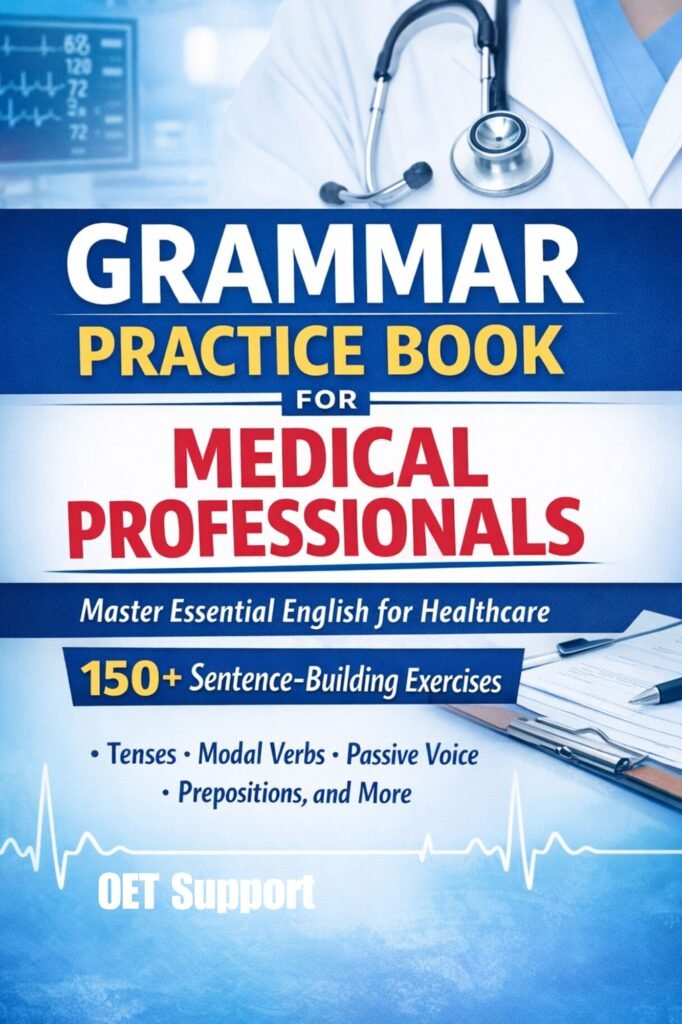
This is why I created grammar practice books specifically for healthcare professionals and OET learners. These resources are designed to help medical English learners strengthen their grammar through practical, professional language practice connected to real healthcare communication.
Rather than focusing only on grammar theory, the books support clearer communication, stronger professional English, and greater confidence for OET preparation and healthcare workplaces.
If you are preparing for OET or working in healthcare using English, developing stronger grammar skills can make a major difference in both exam performance and professional communication.
You can explore grammar practice books for OET and healthcare professionals on Amazon.